I have seen firsthand how important it is to understand wetlands, flooding, and coastal change. Wetlands can act as natural barriers by absorbing stormwater, slowing waves, and reducing erosion. Having observed these processes, I understand that wetlands are more than scenic landscapes; they are critical natural infrastructure. Learning how they help protect communities matters to me because hurricanes and flooding can threaten people’s homes, safety, and livelihoods.
Wetlands also provide benefits beyond flood protection. They can filter pollutants, improve water quality, store carbon, and support fish, birds, and other wildlife. These functions connect healthy ecosystems to the well-being of coastal communities. Wetlands provide habitat for species and can support livelihoods tied to fishing and recreation. Their loss, therefore, can affect both the natural environment and the people who depend on it.
The stakes are especially high for coastal residents. Wetland degradation leaves communities more exposed to storms and contributes to the loss of land that helps buffer settlements from the water. One strategy for addressing this loss is restoring coastal wetlands, particularly through sediment diversions that allow the Mississippi River to reconnect with its delta. Historically, river sediment built and maintained the delta. That natural process has been disrupted by human activity, including levees that channel river water away from its floodplain. Reconnecting the river with the delta could help replenish land, filter pollutants, and enhance wildlife habitat.
However, restoration is complex. Wetlands take time to recover, and projects require substantial funding, planning, and long-term monitoring. Sediment diversions may also change local water and salinity conditions, affecting nearby ecosystems and people who live or work in the area. These impacts make it important to consider trade-offs openly and to support residents who may be affected by project decisions.
Traditional engineering solutions, such as dams and levees, remain essential for immediate flood control. Yet they can interrupt the movement of sediment needed to counter land subsidence and rising sea levels. Also, relying on levees alone creates a false sense of security and if the surrounding wetlands continue to disappear, communities may lose an important natural buffer. A stronger approach combines reliable infrastructure with wetland restoration and other measures suited to local conditions.
Important questions remain. How much restoration is needed to meaningfully reduce flood risk? Which locations would provide the greatest protective benefits? How should decision-makers weigh costs, land loss, storm impacts, and effects on residents and wildlife? Answering these questions requires comprehensive data, transparent communication, and ongoing evaluation as conditions change.
Ultimately, restoration’s technical challenges cannot be separated from its human impact. Residents should be active participants in planning, not simply informed after decisions have been made. Their knowledge of local flooding, fishing, and changing coastlines can complement scientific research and help identify practical concerns. By combining community experience with scientific expertise, coastal communities can pursue solutions that are environmentally sound, fair, and protective of the people who call the coast home. Preserving wetlands is not a complete solution to every flood threat, but it is an important part of building resilience while sustaining the natural systems and livelihoods that coastal communities depend on.
(514)
References
National Oceanic and Atmospheric Administration, "Nature-Based Solutions," NOAA Office for Coastal Management, coast.noaa.gov.
National Oceanic and Atmospheric Administration, "Wetland Benefits," NOAA Office for Coastal Management, coast.noaa.gov.
Mississippi River Delta Restoration Coalition, "Land Loss," mississippiriverdelta.org.
Environmental Law Institute, "Sediment Diversions: Big Projects Confront Land Loss in the Mississippi River Delta," eli.org.
American Society of Civil Engineers, "What can engineers learn from canceled Mid-Barataria Sediment Diversion project," Civil Engineering Source, September 24, 2026, asce.org.
H. Dai, et al., "Communities in ecosystem restoration: The role of inclusive and participatory approaches," People and Nature 6, no. 4 (2024),
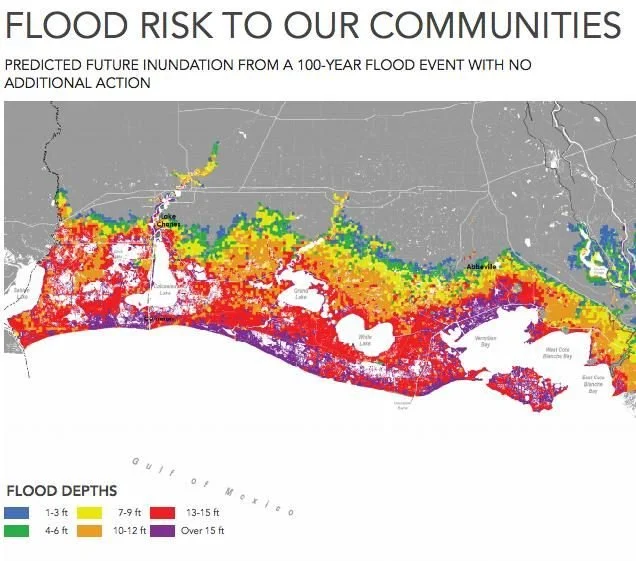
Graph showing flood depths in south Louisiana.
